
The agreement also reaffirms quotas and reduces tariffs on aerospace components, but the issue of steel and aluminum remains unresolved
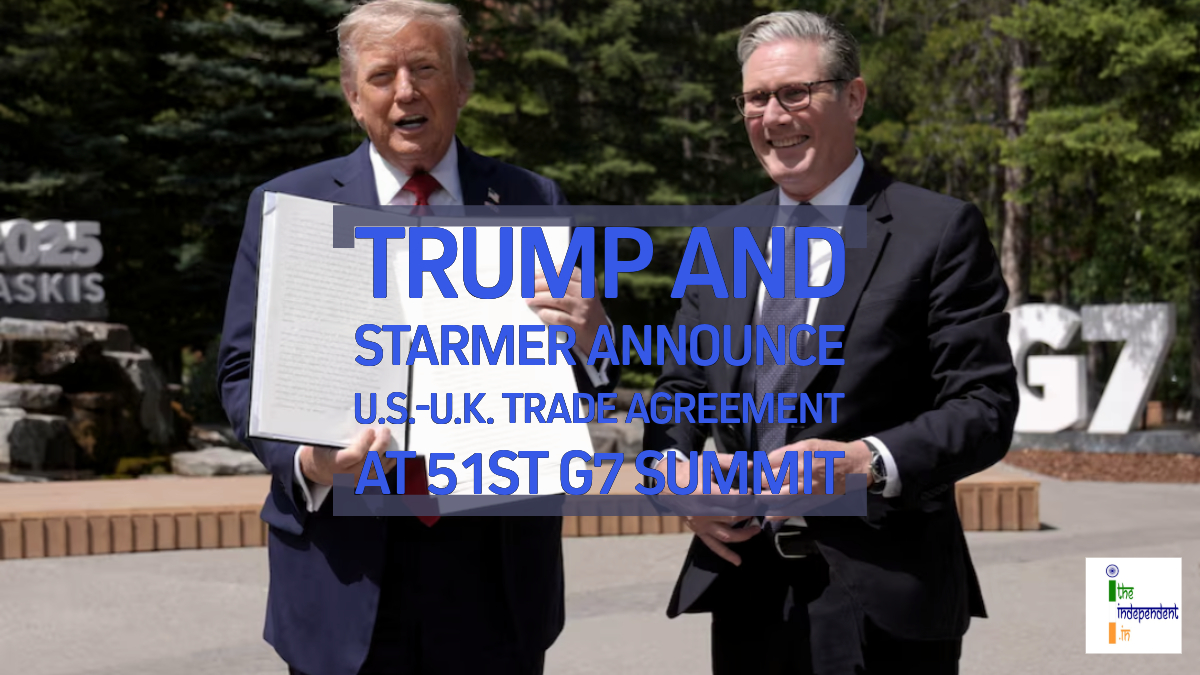
In a significant step forward for transatlantic trade relations, the President of the United States (U.S) – Donald Trump and the Prime Minister of the United Kingdom (U.K.) – Keir Starmer have announced the signing of a bilateral trade agreement that lowers tariffs on key sectors, including automobiles and aerospace.
The deal was unveiled on the sidelines of the 51st Group of Seven (G7) Summit in Alberta, Canada. The agreement also reaffirms quotas and reduces tariffs on aerospace components, but the issue of steel and aluminium remains unresolved.
Sharing a copy of the signed agreement, Trump said that the relationship with Britain is “fantastic”. He further said, “We signed it and it’s done”. Starmer hailed the development as “a very good day for both of our countries,” calling the agreement “a real sign of strength” in the U.S.-U.K. relations.
Taking it to X, Starmer posted,
With @POTUS today as he signs the executive order that will protect UK business, jobs, and workers.
— Keir Starmer (@Keir_Starmer) June 16, 2025
My government is delivering for Britain. pic.twitter.com/wa6UndzYuv
Under the new terms, British automakers can export upto 100,000 vehicles annually to the U.S. at a preferential 10% tariff rate as compared to 25% duty imposed on other nations. The changes will take effect after 7 days of publication in the U.S. Federal Register. In a win for the U.K.’s aerospace industry, tariffs on British aircraft and component parts will be eliminated. Britain becomes the first country to secure such concessions from Washington under the Trump administration’s recalibrated trade agenda.
According to an executive order released by the White House, the U.S. intends to impose a quota on steel and aluminium imports from the United Kingdom that would be exempt from 25% tariffs. The quota is conditioned upon Britain demonstrating security on steel supply chains and production facilities. The quota level will be set by the U.S. Secretary of Commerce – Howard Lutnick. Britain had avoided tariffs of up to 50% on steel and aluminium that the U.S. imposed on other countries earlier this month, but it could have faced elevated tariffs starting 9th July’25 unless a deal to implement the tariff reduction was reached.
The Trade Secretary of the U.K. – Jonathan Reynolds, called the agreement “huge win” for Britain’s automotive and aerospace sectors. Reynolds also revealed that the agreement grants reciprocal access to 13,000 metric tons of beef exports, while underlining that U.S. agricultural imports must comply with the U.K.’s stringent food safety standards. Negotiations will continue on securing preferential terms for the pharmaceutical sector and protecting against further tariffs from ongoing U.S. Section 232 investigations.
Asked whether the deal shields Britain from future tariff threats, Trump said, “The U.K. is very well protected. You know why? Because I like them. That’s their ultimate protection.”
The agreement marks a major milestone in the post-Brexit trade landscape for Britain and signals Washington’s willingness to pursue targeted bilateral accords while broader global trade reforms remain complex and contentious.