
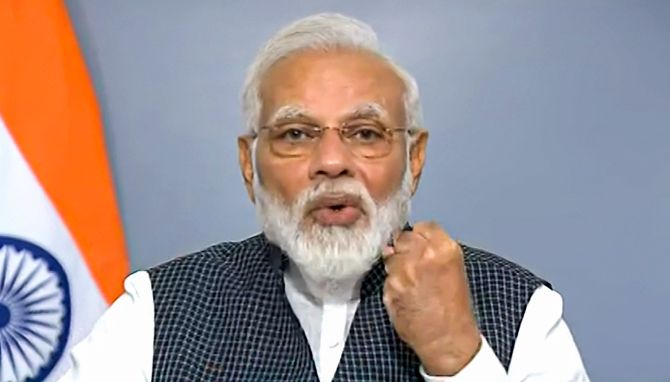
In a stark departure from the typical “Viksit Bharat” (Developed India) rhetoric, Prime Minister Narendra Modi’s address to the Rajya Sabha today felt less like a celebration of progress and more like a somber briefing on national survival. While the word “recession” was never explicitly uttered, the subtext was unmistakable: India is bracing for a profound economic storm triggered by the escalating conflict in West Asia.
A “COVID-Style” Call to Arms
The most chilling moment of the speech came when the Prime Minister drew a direct parallel between the current global crisis and the COVID-19 pandemic. By invoking the spirit of 2020, he signaled that the nation is entering a period where traditional economic growth may take a backseat to crisis management and national resilience.
The announcement of seven empowered groups—mirroring the task forces established during the pandemic—confirms that the government has shifted into an emergency footing. This isn’t just about managing a dip in GDP; it’s about preparing the country for structural disruptions to daily life.
The Energy and Supply Chain Chokepoint
A significant portion of the address was dedicated to the Strait of Hormuz, the world’s most sensitive oil transit point. With the West Asia conflict threatening this vital artery, the Prime Minister was candid about the “serious energy crisis” facing the nation.
- Energy Security: The government is now in a race to secure oil and gas from any viable global source, acknowledging that the surge in Brent crude prices is no longer a temporary spike but a systemic threat.
- Agricultural Stability: In a direct appeal to state governments, the PM emphasized the need to protect fertilizer supplies. This suggests deep-seated concerns over food security and the potential for runaway inflation in the agricultural sector.
From “Tailwinds” to “Headwinds”
For the past few years, India’s narrative has been one of being a “beacon of hope” in a slowing global economy. Today, that narrative shifted. The Prime Minister’s admission that “serious consequences are imminent” if the conflict persists is a sobering acknowledgment that India’s 7-8% growth trajectory is under extreme pressure.
With over one crore Indians working in the Gulf region, their safety and the stability of their remittances—a cornerstone of India’s foreign exchange—are now at risk. The “geopolitical risk premium” that analysts have been whispering about has now been officially recognized at the highest level of government.
The Economic Reality: A “Growth Recession”?
While India’s high base growth makes a technical recession (two consecutive quarters of negative growth) unlikely, the speech pointed toward a “growth recession.” This is a scenario where the economy continues to grow but at a rate so slow that unemployment rises and the “feel-good” factor of the economy vanishes.
The Shift in Stance:
| Feature | Previous Government Stance | Today’s Rajya Sabha Address |
| Primary Focus | Achieving $5 Trillion Economy | National Preparedness and Unity |
| Global Outlook | India as a “Bright Spot” | “Unexpected and Grave Circumstances” |
| Trade Narrative | Expanding Global Partnerships | Obstruction of Vital Sea Routes |
Conclusion
Today’s address was a masterclass in managed expectations. By preparing the public for “COVID-style” challenges, the Prime Minister is attempting to build a cushion of national patience for the economic hardships that likely lie ahead. For investors and citizens alike, the message is clear: the era of easy growth has paused, and the era of “belt-tightening” and strategic endurance has begun.