

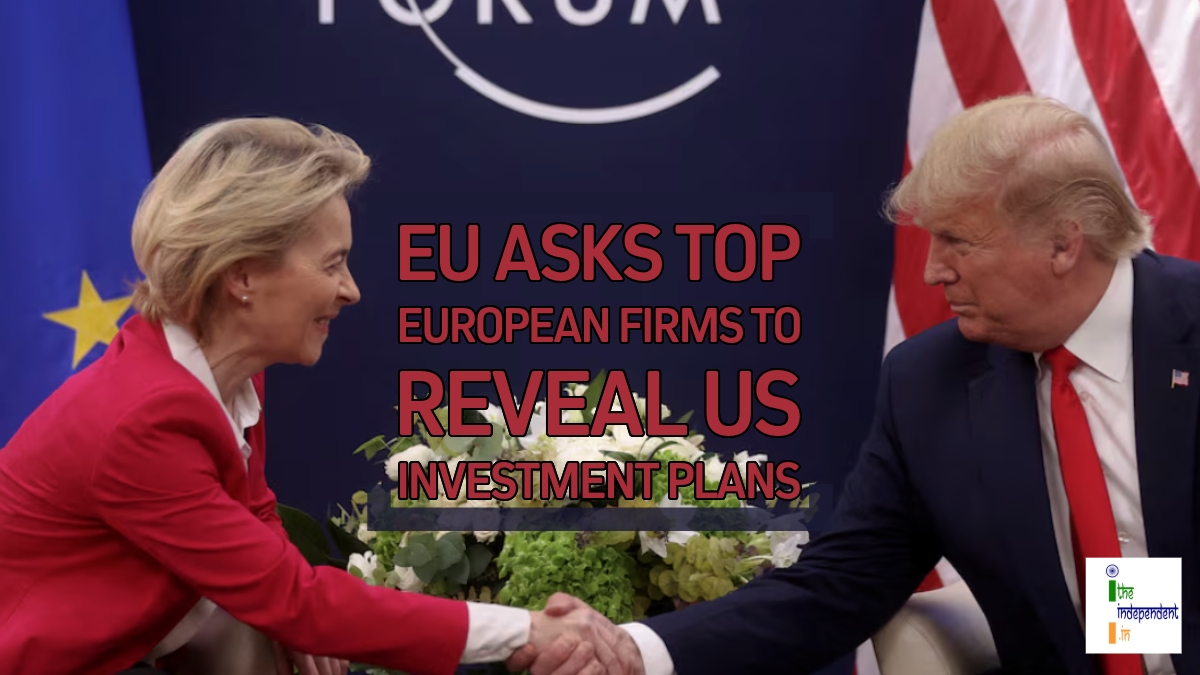
The move underscores an effort to bolster EU’s negotiating position in resolving longstanding trade tensions with the U.S
Ahead of the trade talks with the United States (U.S.), the European policymakers have urgently requested leading companies across the bloc to detail their upcoming investment plans in the U.S.
The European Commission has circulated a survey to members of BusinessEurope, the Confederation of European Business, which represents 42 national industry federations. A parallel inquiry was directed at the European Roundtable for Industry, a forum comprising 59 CEOs of Europe’s largest multinational corporations. This communication reportedly came with a note that the request came personally from the President of the European Commission – Ursula von der Leyen.
The Managing Director of Italy’s auto part maker lobby group, ANFIA – Gianmarco Giorda, said he still hoped the talks would succeed but that formulating strategies was complicated. Germany’s family-owned LAPP Group, which makes everything from cables and wires to robotics for factories, warned that the volatile business environment would still affect some of its specialised products.
Prior to this, frustrated at the slow pace of negotiations, Trump threatened to raise tariffs on the bloc to 50% on 1 June’25. However, after a call with the President of the European Commission – Ursula von der Leyen, who told Trump that the E.U. needs more time to come to an agreement, Trump backtracked and extended the deadline until 9 July ’25.
Talking about the upcoming trade talks and her discussion with the President of the U.S. – Donald Trump, Ursula posted,
Good call with @POTUS.
— Ursula von der Leyen (@vonderleyen) May 25, 2025
The EU and US share the world’s most consequential and close trade relationship.
Europe is ready to advance talks swiftly and decisively.
To reach a good deal, we would need the time until July 9.
The European Commission’s move underscores a strategic effort to bolster its negotiating position in talks aimed at resolving longstanding trade tensions with the U.S., particularly concerning U.S. tariffs on E.U. exports. While previous offers from Brussels included mutual elimination of industrial goods tariffs and increased European purchases of American soybeans, arms and Liquefied Natural Gas (LNG), Washington’s response has remained cautious.
Trump has made clear that a chief goal of his tariffs is to re-industrialise the United States, which European corporate investment could contribute to. The E.U. is particularly focused on lifting the 25% U.S. tariffs on steel and automotive exports and preventing the implementation of a reciprocal 20% tariff proposal, which is currently paused at 10% until July as part of a 90-day grace period. As negotiations progress, the level and nature of European corporate investment in the U.S. may prove pivotal in shaping a transatlantic accord that avoids further escalation and paves the way for more stable trade relations.