
The Agreement comes as a significant step in mending post-Brexit relations with EU as global geopolitical tensions mount
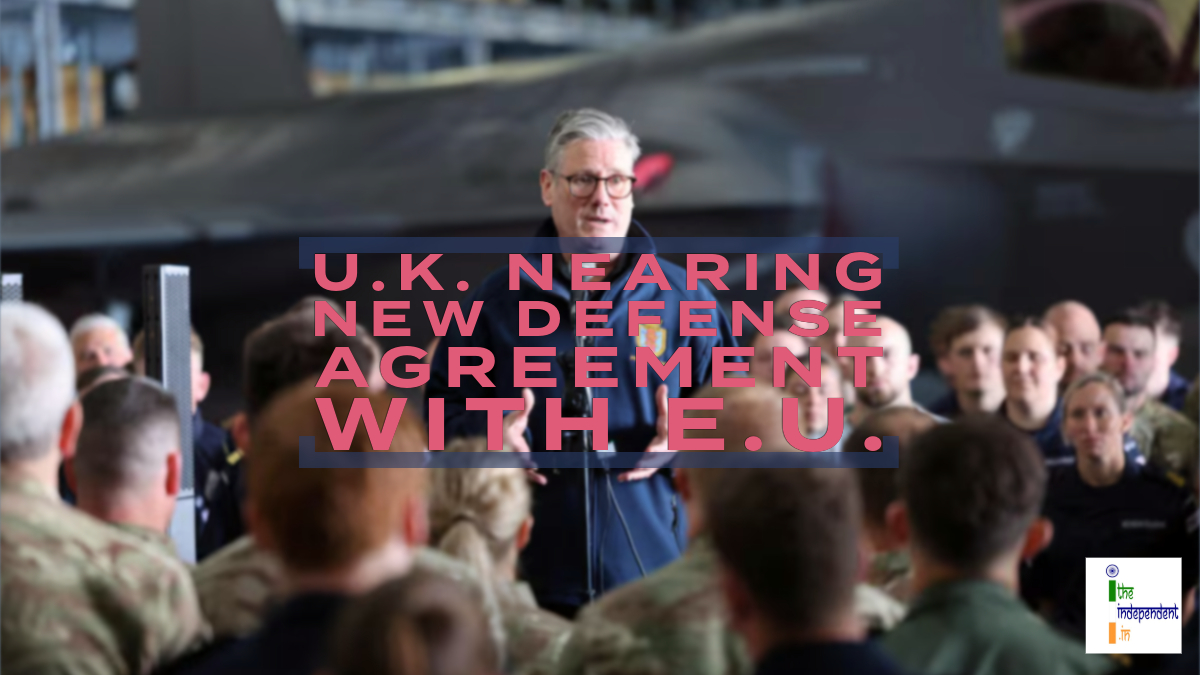
The United Kingdom (U.K.) is nearing a new defense agreement with the European Union (E.U.), signaling a significant step in mending post-Brexit relations as global geopolitical tensions mount following the upending of security and trade alliances by the President of the United States (U.S.) – Donald Trump.
The Prime Minister of the U.K. – Keir Starmer has prioritized rebuilding ties with the EU. His government is making defense and security the cornerstone of this diplomatic reset—an area where the UK retains considerable strength and credibility.
Ahead of the talks with the President of the European Commission – Ursula von der Leyen, Starmer said, “In a world which seems increasingly unstable with an uncertain future, it is so good that we are working so closely together on so many issues: defence and security… but also on trade and the economy.”
Taking it to X, Starmer tweeted,
My government was elected to deliver change.
— Keir Starmer (@Keir_Starmer) April 24, 2025
We will seize opportunity to improve the lives of working people and provide Britain with long-term stability and security.
Great to see @VonDerLeyen today to discuss UK-EU partnership. pic.twitter.com/Eem0Jtbrjm
Ursula tweeted,
📍In London to prepare the EU-UK Summit with @Keir_Starmer.
— Ursula von der Leyen (@vonderleyen) April 24, 2025
We are friends.
And we are Europeans.
It means that we share interests and democratic values.
And that we are ready to face global challenges as like-minded partners. pic.twitter.com/z9CFqxC9nd
Officials on both sides are optimistic that a formal defence pact can be unveiled at a forthcoming summit in May’25. Germany’s Ambassador to the U.K. – Miguel Berger, emphasized the urgency of enhanced cooperation noting that the upcoming Summit could also lay the groundwork for broader collaboration in areas like energy, fisheries, food standards, and youth mobility.
The proposed defence accord comes amid a complex geopolitical landscape. The U.K., which formally exited the E.U. in 2020, is navigating the strategic aftermath of the Trump Administration’s disruption of long-standing trade and defence frameworks.
While Starmer pursues deeper cooperation with Brussels, his government is concurrently pushing for a trade breakthrough with the U.S. Chancellor of the Exchequer – Rachel Reeves is expected to meet U.S. Treasury Secretary Scott Bessent in Washington this week in a bid to reduce American tariffs on British goods.
Reeves struck an optimistic tone, stating that she believed a trade deal with Washington is “absolutely achievable,” even as London insists it won’t compromise on U.K. standards in sensitive sectors such as food and automotive manufacturing.
The U.K. is also hoping to access the E.U.’s new € 150 billion rearmament fund, ‘Security Action for Europe’ (SAFE). It will help countries invest in key defence areas like missile defence, drones, and cybersecurity. The funds will be raised on capital markets and disbursed to interested Member States upon demand, based on national plans.
The access to the SAFE fund would open doors for British defence firms, such as BAE Systems, to secure joint contracts and participate in collaborative projects across the continent. Earlier this year, Starmer underscored the potential of enhanced cooperation in military mobility, logistics, counter-sabotage measures, and the co-development of next-generation defence technologies.
However, the Leader of the Reform U.K. Party – Nigel Farage, expressed concern that deeper alignment with the E.U. on defence matters, including intelligence sharing, could fundamentally damage their relationship with the North Atlantic Treaty Organisation (NATO) and America.