
Trump’s ultimatum signals his increasing frustration with the prolonged war, now in its fourth year
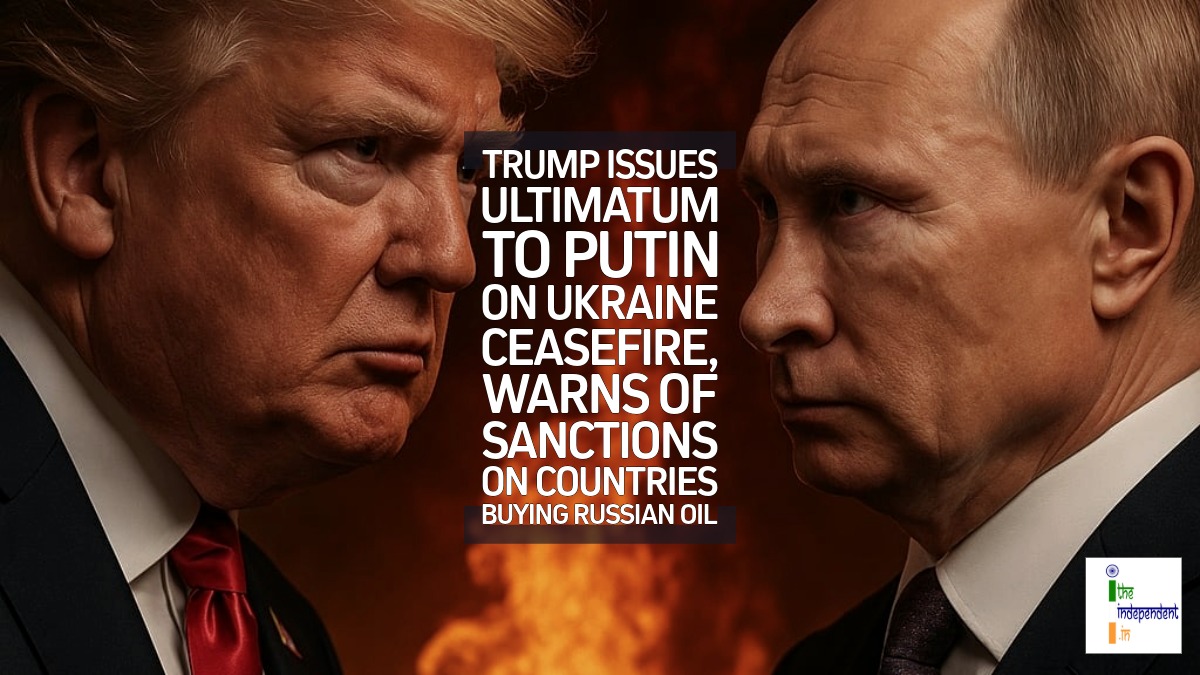
On Monday, U.S. President Donald Trump intensified his push for Russia to halt its war in Ukraine by announcing the revised deadline for action on the issue. Speaking at a news conference in Scotland, Trump stated that he will shorten the 50-day deadline which was previously given to Russia for agreeing to the peace deal in Ukraine, signaling his increasing frustration with the prolonged war, now in its fourth year.
“I’m going to reduce those 50 days that I gave him to a lesser number because I think I already know the answer what’s going to happen.” Trump said. The new deadline for Putin to agree to a deal would be “10 or 12 days.” Over the idea of shortening the deadline, Ukrainian presidential chief of staff Andriy Yermak commended him for “conveying a strong message of peace backed by strength,” noting that Putin “only responds to power.”
Commenting on the latest developments Monday afternoon, Russian MP Andrey Gurulyov dismissed Trump’s ultimatums, saying they “no longer work… neither on the front line nor in Moscow,” and asserted that Russia stands firm with its “weapons, principles, and will.”
Earlier this month, Trump stated that Moscow had 50 days to agree to a peace deal or face “very severe” economic sanctions, a statement he made during NATO Secretary General Mark Rutte’s visit to Washington. In case Moscow doesn’t comply, Trump warned he would enact harsh secondary sanctions—including the possibility of 100 % tariffs—not only against Russia, but also against any nation or entity that continues purchasing Russian energy, particularly oil.
If enforced, Trump’s proposed secondary sanctions—or tariffs—would reverberate globally by penalizing major energy buyers such as India and China for importing Russian oil and gas. Analysts warn this could disrupt international markets and challenge global energy flows.
China could potentially influence Moscow’s behaviour, but it has reportedly told European diplomats that it cannot risk a Russian defeat, as that would allow the U.S. to fully redirect its focus toward China. Rather than reshaping its entire geopolitical strategy, Beijing may prefer to wait and deal with a weakened Trump.
Over the next two weeks, Moscow will need to rally its allies and energy customers to continue their support amid growing pressure. Ukraine must hold its ground against a fierce and advancing Russian offensive. Meanwhile, Trump administration faces a key decision—whether to stand by its threats or let them fade.