

The move marks another sign of growing friction within the European Union over migration policies
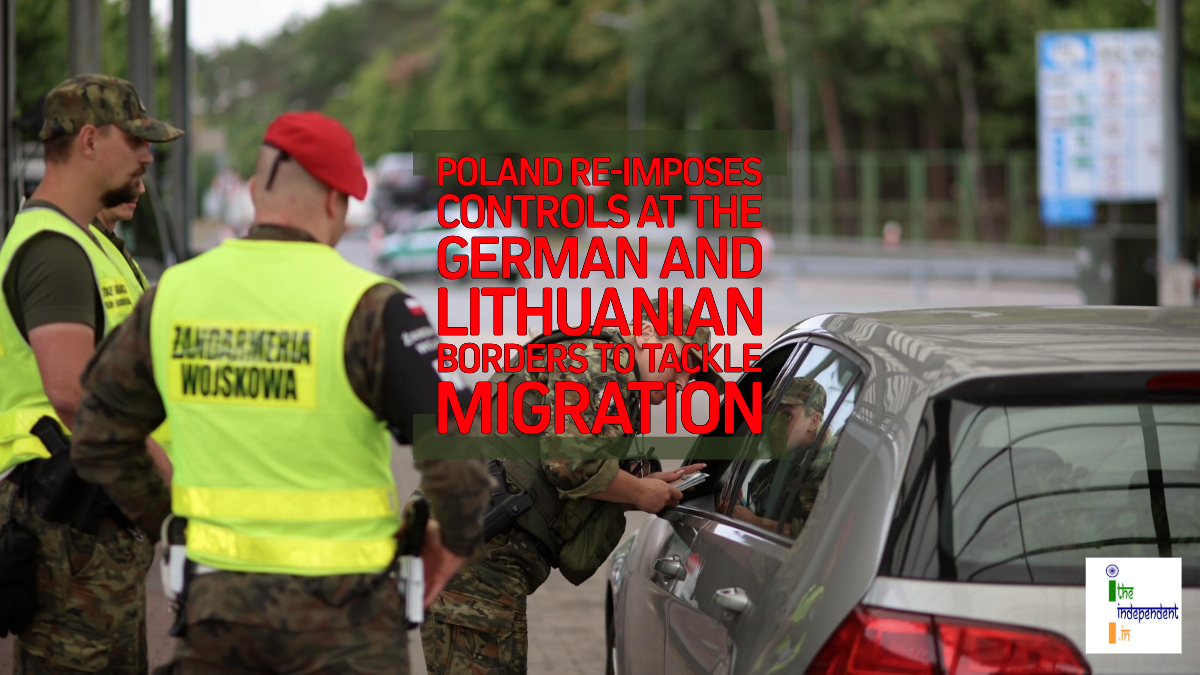
Poland has re-imposed temporary border controls with Germany and Lithuania in a bid to curb what it describes as a growing influx of undocumented migrants entering from the West and North.
The move, which took effect today, i.e., Monday, 7th July’25, marks another sign of growing friction within the European Union (E.U.) over migration policies and the integrity of the passport-free Schengen zone.
The Polish Government’s decision follows similar measures implemented by Germany, Belgium, and the Netherlands, all of which cited increased migrant flows and mounting domestic pressures. The reintroduction of controls reflects deepening public concern across Europe about border security and migration.
The groups of far-right activists have launched “citizens’ patrols” on the Western border amid Polish media reports of German authorities sending undocumented migrants back across the frontier.
Speaking on the occasion, the Interior Minister of Poland – Tomasz Siemoniak said, “Everything is proceeding without incident. Traffic is currently moving smoothly, 800 police officers, 200 gendarmerie soldiers, 500 territorial army soldiers, all services… are in full readiness.”
Siemoniak also clarified that only state authorities—such as border guards—are permitted to carry out vehicle inspections, in reference to the “citizens’ patrols”. Poland’s Border Guard have said that they have detained an Estonian national on the Lithuanian border for attempting to smuggle 4 undocumented migrants believed to be from Afghanistan.
Tensions in Poland have been further inflamed by recent violent incidents allegedly involving foreign nationals. In June’25, the killing of a 24-year-old Polish woman in the city of Toruń by a Venezuelan man sparked public outrage. On Sunday, some 10,000 people participated in a nationalist-organised march in her memory.
Further unrest erupted after a Polish man was fatally stabbed in Nowe, Northern Poland, over the weekend. Authorities arrested a Colombian national in connection with the incident and later detained 13 individuals, 3 Poles and 10 Colombians, linked to the altercation. This was followed by angry demonstrators gathering outside the workers’ hostel where the Colombians resided.
Human rights groups have expressed alarm over the rise of vigilante border patrols and the hardening political rhetoric surrounding migration. The Helsinki Foundation for Human Rights issued a statement on Friday condemning the actions of these “self-proclaimed groups,” warning that such behaviour is “the result of a radicalising political narrative that presents migration as a threat.” The foundation urged authorities and the public to foster a “reliable and fact-based debate on migration and border policy, not one driven by fear and manipulation.”